
About All Tours UTV and ATV ToursFrom Las Vegas ToursHalf Day ToursPrivate Tours Directions Hours & Fees
Find Tours 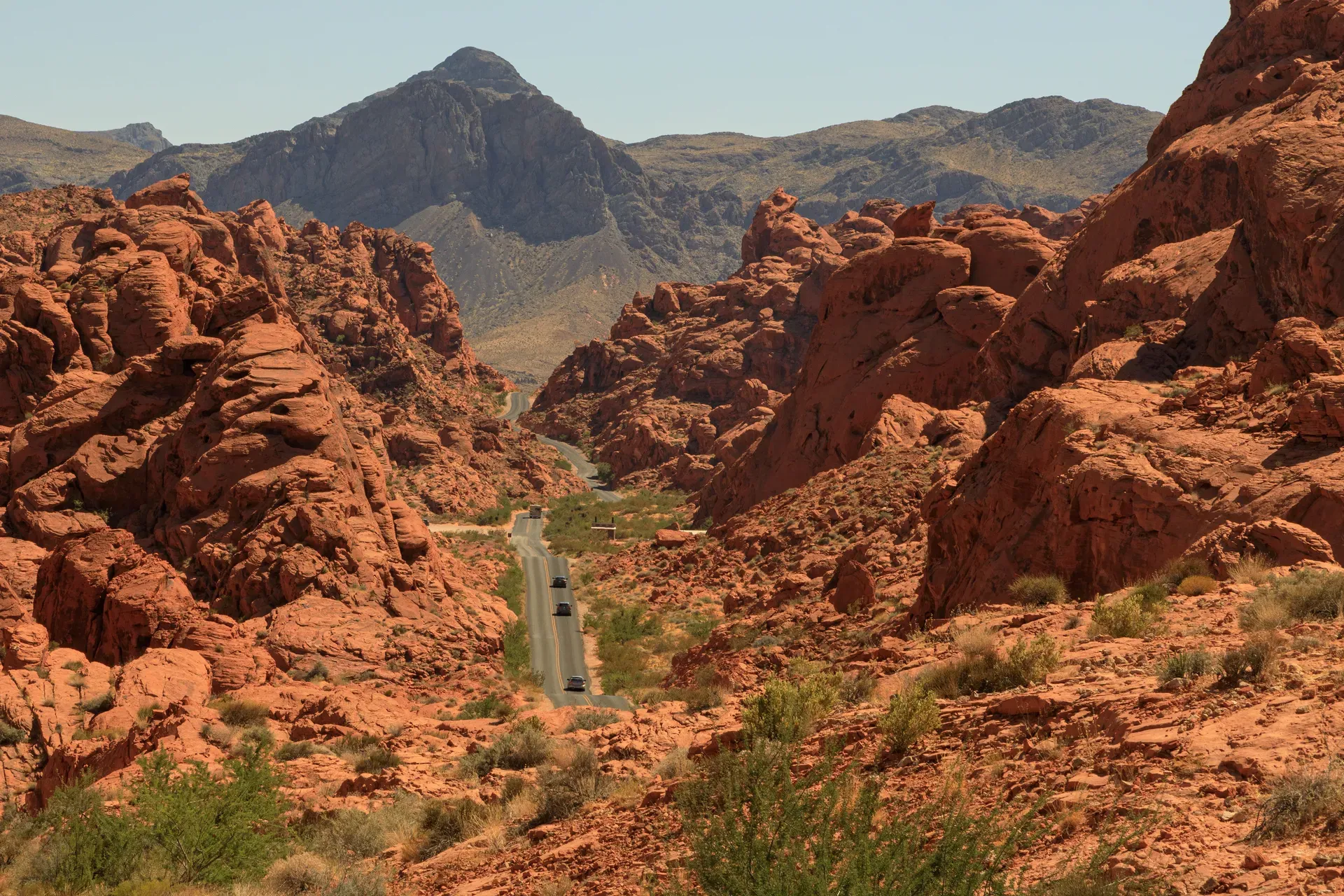
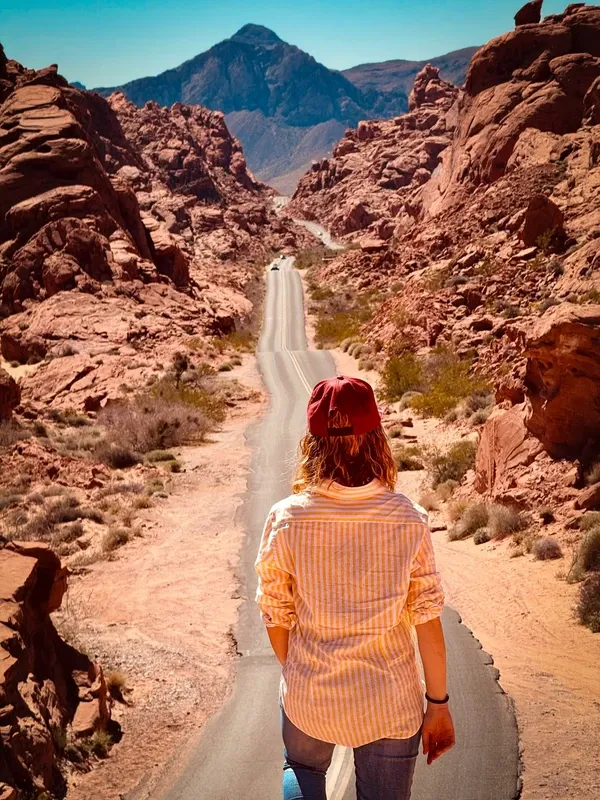
Nevada's oldest state park spans nearly 46,000 acres of 150-million-year-old bright red Aztec sandstone. Located 50 miles northeast of Las Vegas, the recreation area allows visitors to hike sandy trails and drive paved scenic routes past ancient petroglyphs carved over 2,000 years ago.
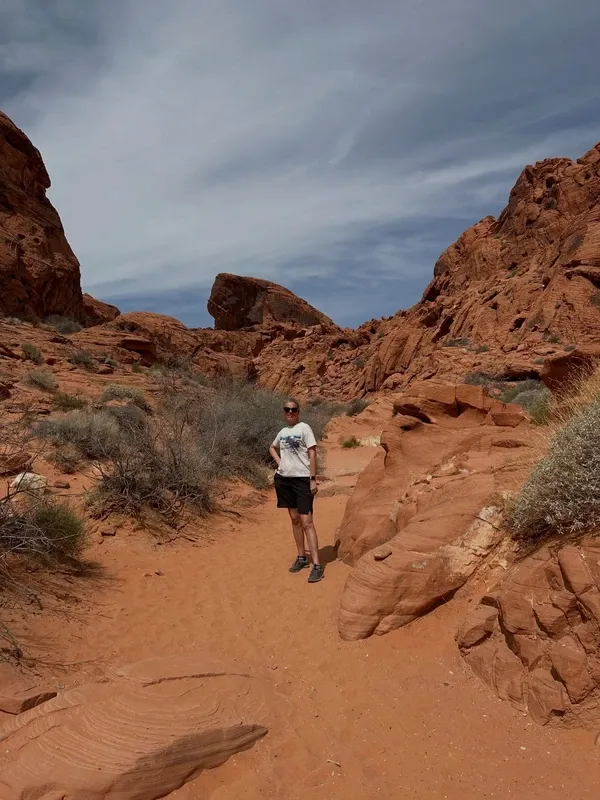
Find Guided ToursValley of Fire State Park covers nearly 46,000 acres of the Mojave Desert, located approximately 50 miles northeast of Las Vegas. As Nevada's oldest and most visited state park, it draws nearly one million visitors annually. The landscape sits within a four-by-six-mile basin at elevations ranging from 1,320 to 3,009 feet. Its defining feature is a 40,000-acre expanse of bright red Aztec sandstone outcrops surrounded by gray and tan limestone mountains.
The region's geological history spans hundreds of millions of years. Between 250 and 550 million years ago, an ancient shallow sea covered the area, leaving behind Paleozoic gray rocks containing fossils of algae, trilobites, and corals. The red Aztec Sandstone formations developed much later. Roughly 150 million years ago, during the Jurassic period, shifting sand dunes slowly hardened into the massive stone peaks visible today.
Human presence in the valley dates back 11,000 years. The Basketmaker culture and Ancestral Puebloans occupied the region from 300 BC to 1150 AD. These early inhabitants carved petroglyphs into the sandstone over 2,000 years ago. The park protects these cultural artifacts alongside rare prehistoric resources, such as petrified trees, earning it a designation as a National Natural Landmark in 1968 and recognition via Nevada Historical Marker #150.
Modern development began in 1912 with the construction of a rough road connecting Salt Lake City and Los Angeles along the Arrowhead Trail. In the 1920s, an AAA official coined the name "Valley of Fire" after watching a desert sunset. The Civilian Conservation Corps constructed the first campgrounds and facilities in 1933. The park formally opened on Easter Sunday in 1934, welcoming 9,000 visitors its first year, before receiving official legal designation from the Nevada State Legislature in 1935.

Discover the full history and cultural significance on our About page.
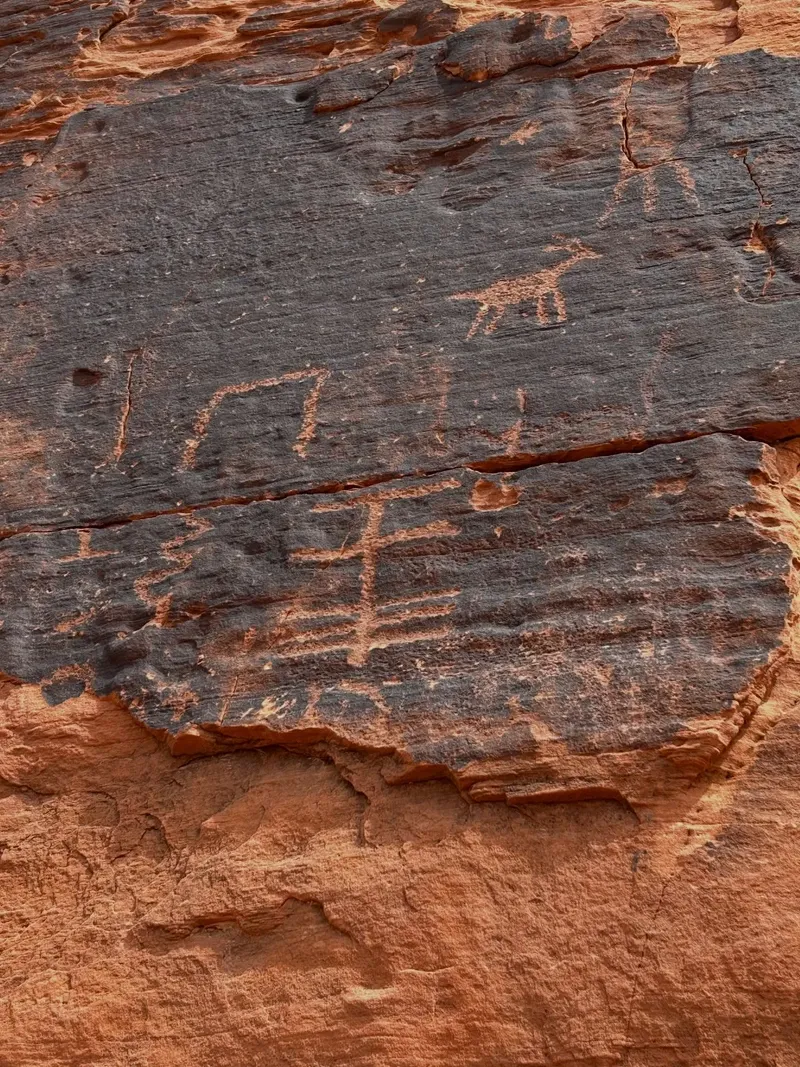
A steep metal staircase ascends to a high viewing platform facing 2,000-year-old rock carvings. Left by the Basketmaker and Early Pueblo cultures, these ancient petroglyphs depict historical scenes and tools like the atlatl, a prehistoric throwing weapon utilized long before the bow and arrow.
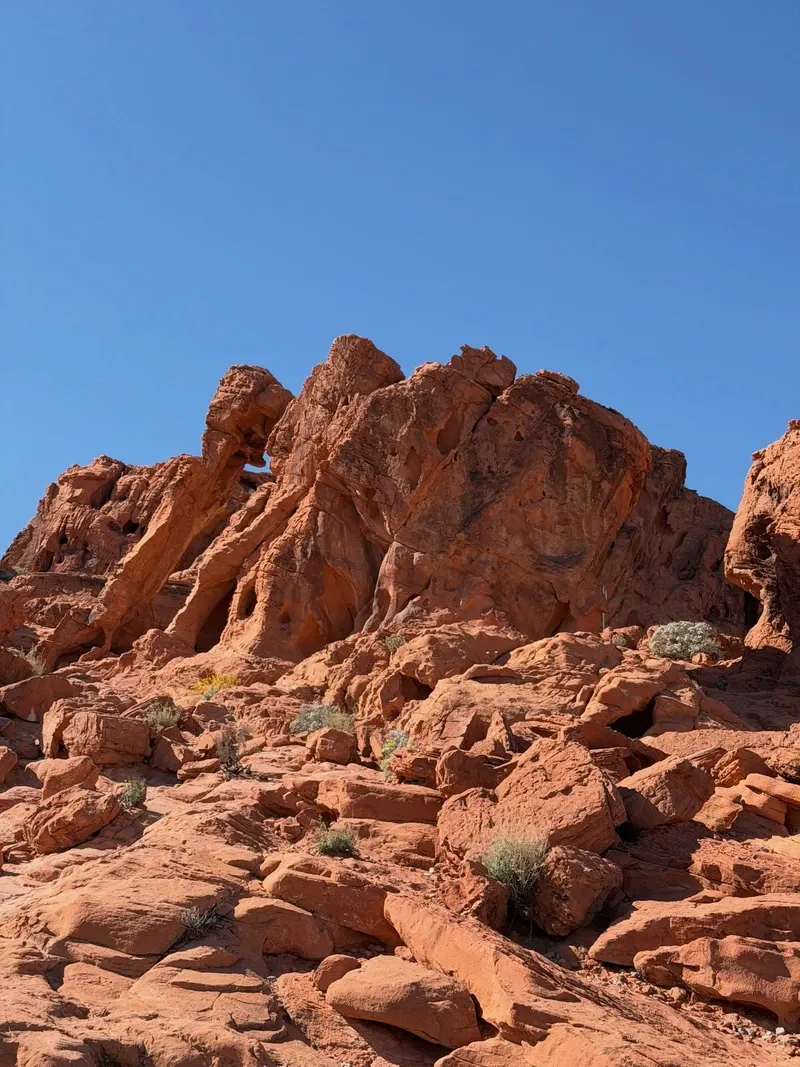
Located near the East Entrance, this delicate rock formation closely resembles an elephant walking across the desert. Visitors can view this geological masterpiece, sculpted by thousands of years of erosion, via a highly manageable 0.2-mile out-and-back path or an extended 1.25-mile loop trail.
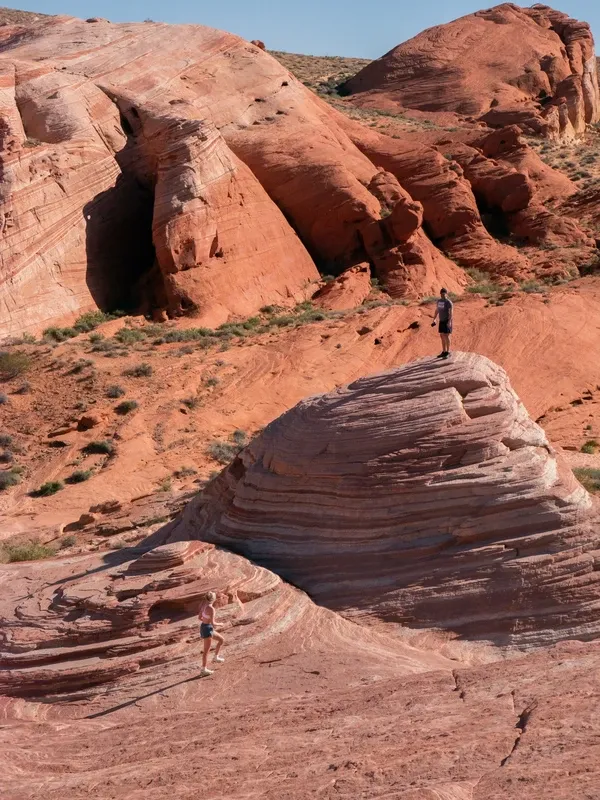
This moderately strenuous 1.5-mile out-and-back trail leads hikers over loose sand and smooth stone. Visitors walk across 150-million-year-old Aztec sandstone displaying striking wave-like patterns of red, orange, and white rock that glow intensely under the late afternoon sun.
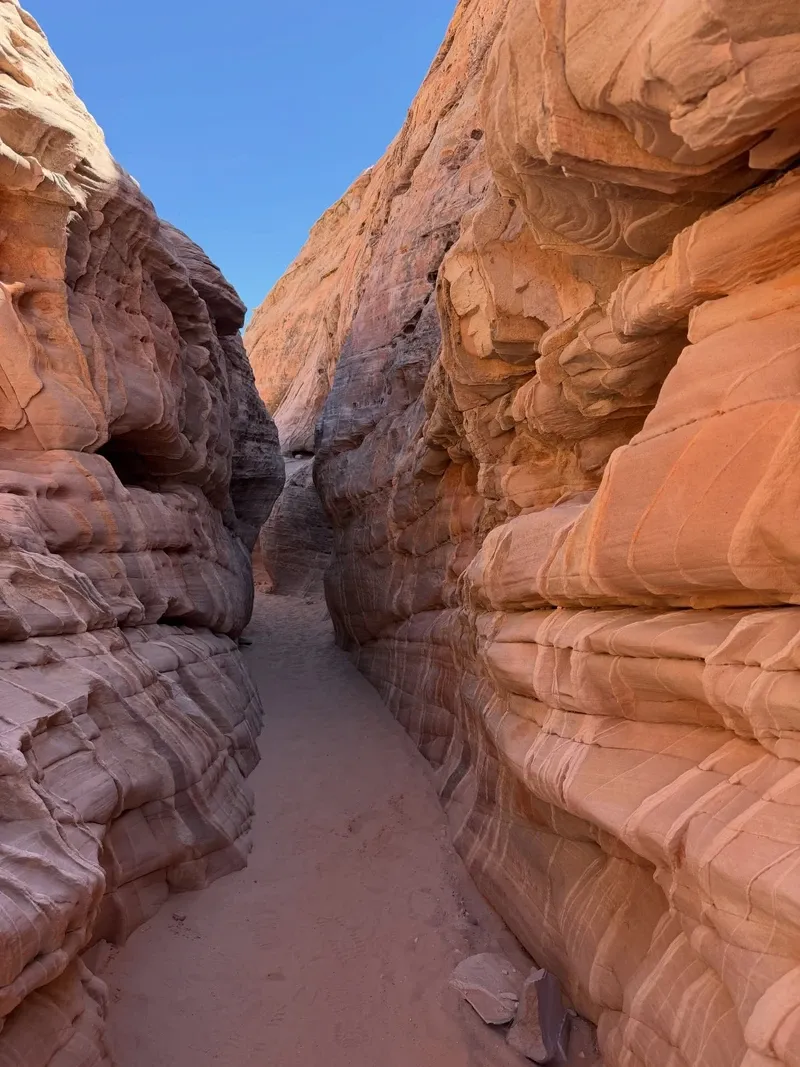
A scenic 1.1-mile loop trail guides hikers through a diverse desert landscape featuring dramatic sandstone formations and a narrow slot canyon. The route showcases a sharp visual contrast between brilliant white stones and fiery red rocks, providing highly photogenic angles.
Hand-picked tours with free cancellation and verified reviews
 Free Cancellation 6h
  Free Cancellation 5h
  Free Cancellation 8h
  6h
6h  6h
6h  Free Cancellation 5h
  Free Cancellation 5h 30min
  Free Cancellation
 The optimal time to visit Valley of Fire is between October and April when temperatures are mild, ranging from freezing to 75 degrees Fahrenheit. These cooler months provide safe hiking conditions and avoid the life-threatening extreme heat that dominates the summer.
March and April offer excellent hiking conditions with mild temperatures, drawing large crowds. By May, life-threatening heat arrives, and several popular trails face mandatory seasonal closures starting May 15.
Summer temperatures regularly exceed 100 degrees Fahrenheit, occasionally surpassing 120 degrees. This extreme heat forces mandatory closures on popular trails, while sudden thunderstorms create severe flash flood hazards in canyons.
September remains dangerously hot, but October and November introduce mild weather ideal for trail exploration. The softer lighting enhances photography, though you should arrive early to secure limited parking.
Winter delivers optimal daytime temperatures between freezing and 75 degrees Fahrenheit. Safe hiking and clear skies are guaranteed, though the park completely closes for maintenance from December 1 through 14.
Valley of Fire State Park is open 365 days a year from sunrise to sunset. The Visitor Center operates daily between 9:00 a.m. and 4:00 p.m. The park office is open Monday through Friday during those same hours but closes on state holidays. The entire park undergoes an annual maintenance closure from December 1 through December 14, during which all access is strictly prohibited.
| Category | Price |
|---|---|
| Nevada registered vehicle (day-use) | $10.00 |
| Non-Nevada registered vehicle (day-use) | $15.00 |
| Walk-in, bicycle, or horseback (per person) | $2.00 |
| Towed-in vehicles | Free |
Day-use entry does not require reservations. If arriving after 4:00 p.m. or when fee booths are unstaffed, visitors must bring exact cash to use the self-pay envelopes. Overnight camping requires advance booking up to 11 months ahead via reservenevada.com.
For complete schedules and ticket prices, visit our Hours & Fees page.
Valley of Fire State Park is located 50 to 55 miles northeast of the Las Vegas Strip. Visitors can reach the park by driving a personal vehicle or booking a private guided tour.
📍 Valley of Fire Highway, Southern Nevada
Driving a personal vehicle is the most practical way to reach the park. Head north on Interstate 15 for 35 to 40 miles to Exit 75, then drive east on Valley of Fire Highway for 17 miles to the West Entrance. Alternatively, take Lake Mead Boulevard to Northshore Drive for a scenic route to the East Entrance. Avoid rideshare services like Uber, as nonexistent cell service makes return trips impossible.
Travelers seeking a guided option can book a private limousine coach accommodating 1 to 10 people. The service provides an 8:00 AM pick-up from Las Vegas hotels and a 12:00 PM drop-off. Guests receive two hours inside the park to hike or view the sandstone formations. This package also allows visitors to bring their own alcoholic beverages for the 50-mile ride.
For detailed transport options and routes, visit our Directions page.
Cell phone service is extremely poor or nonexistent throughout most of the 46,000-acre park. You should download offline maps before arriving to navigate trails and roads safely. Do not use rideshare services like Uber or Lyft to get there. Securing a return ride from this remote desert area is nearly impossible.
There are no restaurants or grocery stores located inside the park boundaries. The Visitor Center sells souvenirs but carries only a basic, limited selection of food. Pack your own lunch, snacks, and plenty of water for the day. Staying hydrated is critical since summer temperatures frequently exceed 100 degrees Fahrenheit.
The daily entrance fee is $10.00 for Nevada residents and $15.00 for out-of-state vehicles. If you plan to arrive after the fee booths close or after 4:00 p.m., you will need exact cash. Visitors must use the self-pay envelopes provided at the entrance stations to pay their admission.
Parking lots at popular trailheads like the Fire Wave and White Domes have limited capacity and fill up quickly. Plan to arrive early in the morning to secure a spot. This is particularly important during the busy spring and fall seasons. Early arrival also helps you avoid the intense midday sun.
The park is home to highly aggressive Africanized honey bees that constantly search for water sources. Keep your campsite completely dry and avoid leaving out open water containers. If you encounter scout bees on the trail, turn around immediately. Protecting your water supply prevents swarms from gathering near your group.
Summer temperatures regularly top 120 degrees Fahrenheit, creating severe risks for heat stroke. Consequently, several popular routes like the Fire Wave and White Domes close seasonally starting May 15. Always consult with rangers regarding current closures. You should also check the forecast for sudden flash floods before hiking into narrow slot canyons.
This massive recreation area borders the eastern edge of the state park at the Virgin River confluence. It provides a stark contrast to the dry desert environment by offering boating, fishing, and water sports along its shoreline.
Established in 1865, this historic Mormon settlement was submerged during the 1930s construction of the Hoover Dam. Dropping water levels have since revealed the town's ruins, creating an intriguing historical excursion.
Located in nearby Overton, this museum houses artifacts from the Ancestral Puebloans who farmed the Moapa Valley. It gives essential cultural context to the ancient petroglyphs found inside the park.
Read what travelers share about their experience visiting Valley of Fire — from practical tips to personal highlights.
The day-use entrance fee is $10.00 per vehicle for Nevada residents and $15.00 for out-of-state vehicles. Visitors arriving on foot, bicycle, or horseback pay $2.00 per person. If you arrive after the fee booths close at 4:00 p.m., bring exact cash to pay using the self-pay envelopes.
The park is open daily from sunrise to sunset, 365 days a year. The Visitor Center operates from 9:00 a.m. to 4:00 p.m. daily. Note that the entire park closes to all visitors for annual maintenance from December 1 through December 14.
The park is located 50 to 55 miles northeast of the Las Vegas Strip, which takes about one hour by car. You can drive north on Interstate 15 for 35 to 40 miles to Exit 75, then head east on the Valley of Fire Highway for 17 miles. Do not rely on ride-sharing apps like Uber or Lyft to get there, as the lack of cell service makes securing a return trip nearly impossible.
Pack your own lunch, snacks, and plenty of water, as there are no restaurants or grocery stores inside the park boundaries. You should also wear sturdy hiking shoes and sun-protective clothing to handle temperatures that regularly exceed 100 degrees Fahrenheit in the summer. Finally, download offline maps before arriving because cell phone service is extremely poor or nonexistent across the 46,000-acre park.
Accessible restrooms and shaded picnic areas are available at Atlatl Rock, Seven Sisters, the Cabins, and White Domes. Visitors with mobility limitations can easily view the 150-million-year-old rock formations from paved scenic drives and numerous roadside pullouts. However, most hiking trails consist of loose sand or uneven sandstone that will require assistance for wheelchair users.
Day-use visitors do not need an advance reservation to enter the park. If you plan to stay overnight, you must book one of the 73 available campsites up to 11 months in advance through the state's reservation website. Special permits are required and must be arranged at least 30 days in advance for commercial photography, weddings, and group-use areas.
The use of drones is strictly prohibited throughout the park because they pose a high risk to daily helicopter landings. You can only fly a drone if you obtain an approved commercial photography permit at least 30 days in advance. This permit requires a $25 application fee, a $100 daily reservation fee, and a certificate of liability insurance.
Many popular trails are subject to strict seasonal closures beginning May 15 to prevent life-threatening heat illnesses. Summer temperatures regularly exceed 100 degrees Fahrenheit and can surpass 120 degrees Fahrenheit. The best time to hike is between October and April when temperatures range from freezing to a mild 75 degrees Fahrenheit.
Browse verified tours with free cancellation and instant confirmation.
Find Tours